You can do the same exercise, with the same weight, for the same number of repetitions—and still get completely different results.
The difference often lies not in what, but in how.
And this is exactly where a training stimulus comes into play that many people underestimate: tension. While intensity, volume, and frequency are relatively tangible, tension often seems abstract.
In many cases, it determines whether your muscle is actually working—or whether you’re just going through the motions.
What does “intensity” actually mean in training?

When we talk about tension in training, it essentially boils down to one simple question: How long is your muscle actually under load? That is exactly what the term Time Under Tension (TUT) describes.
A simple example:
You do 10 squats as fast as possible → little time under tension
You do 10 squats in a controlled, slow, and proper manner → significantly more tension
In both cases, you’ve done 10 repetitions. But your muscles have worked in completely different ways.
Tension isn’t created just by weight—but by time and control.
Why tension makes such a big difference
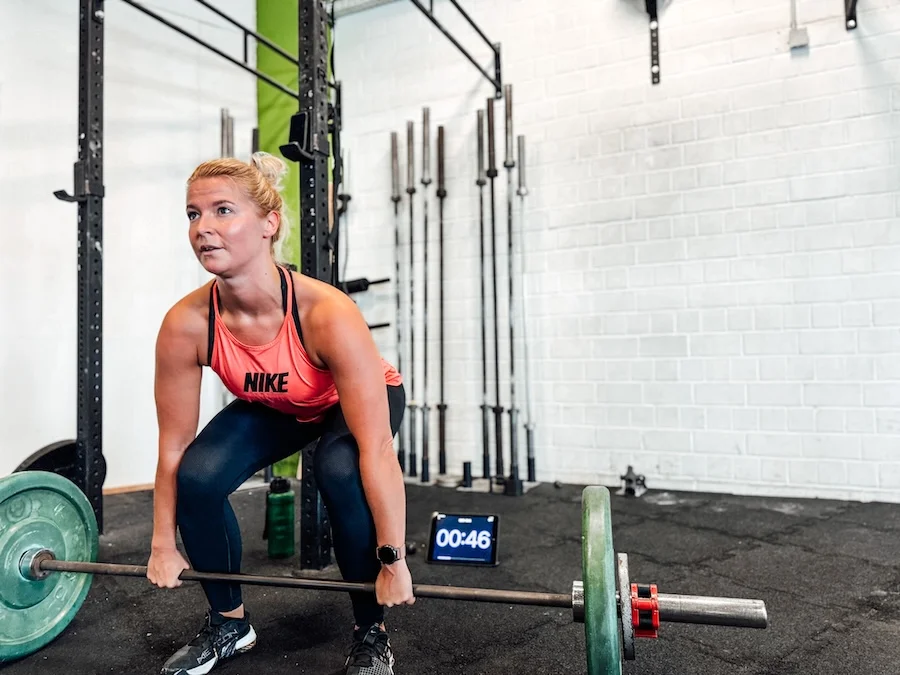
Your body responds to stimuli. And one of the most important stimuli for muscle growth and strength development is mechanical tension.
When a muscle is under load for an extended period, the following happens:
more muscle fibers are activated
the load is distributed more evenly throughout the movement
your body is forced to actively maintain the tension
This not only provides a stronger training stimulus but also leads to better control and cleaner movement patterns.
A side effect that many underestimate: You develop a much better sense of the muscles you’re training. And that is precisely the foundation for targeted training.
The most common mistake: weight instead of tension
Many people train according to the same pattern: More weight = more progress. The only problem is: More weight often leads to less control.
Repetitions are performed faster, with poor form, and using momentum. The focus is on somehow getting through the movement—not on performing it with proper form.
The result:
less effective muscle work
more strain on joints and passive structures
less actual training stimulus
You’re moving weight—but you’re not training the muscle optimally.
In comparison: Less weight, but controlled movement, slow execution, and conscious tension often lead to a significantly more effective workout.
It feels more strenuous—and it is. But that’s exactly where the difference lies.
How to purposefully increase tension during your workout
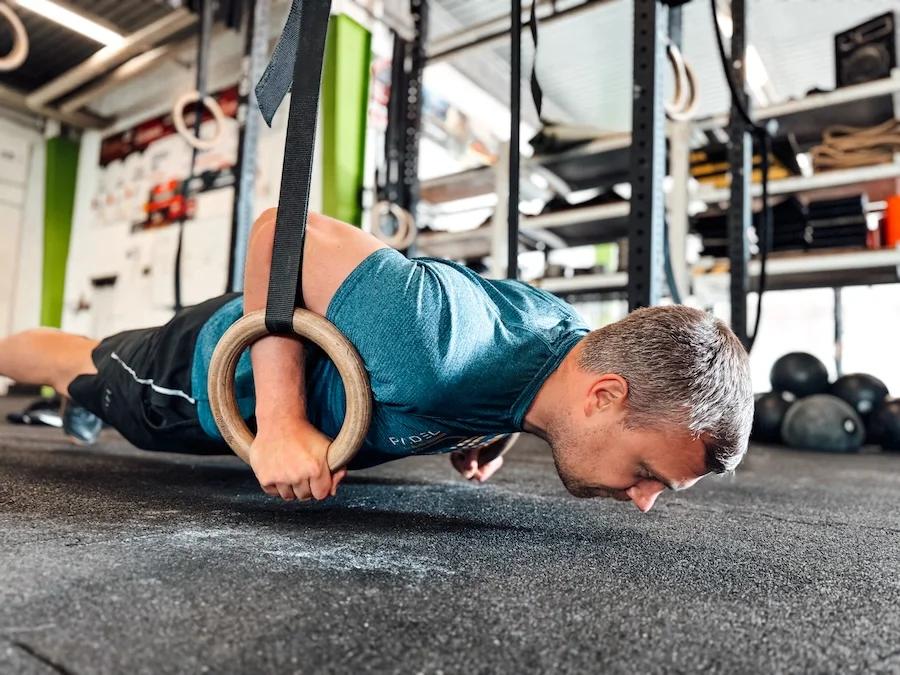
Tension doesn't just happen by chance. You can consciously control it. Here are the key strategies you can apply directly in your training:
1. Control your speed
The simplest and most effective way to increase tension is to control your pace. Instead of just “rattling off” repetitions, consciously slow down the movement.
A classic example:
3 seconds in the eccentric phase (e.g., lowering into a squat)
brief pause at the lowest point
controlled return to the top
This alone significantly increases the time under tension. And suddenly, even lighter weights feel much more intense.
2. Take breaks while moving
Another effective approach is to intentionally incorporate short pauses within a movement.
Examples:
Hold briefly at the bottom of the squat
Control the bottom position during push-ups
Briefly stabilize at the top during pull-ups
These pauses force your body to actively maintain tension—without using momentum.
3. Use the full range of motion
Half-reps reduce the time under tension and the training stimulus. When you use the full range of motion, you automatically increase the time your muscle is working.
This means:
deeper squats
full extension during push-ups
full range of motion during pull-ups
More range = more work = more tension
4. Focus on muscle work rather than movement
That sounds simple, but it’s crucial. Many people focus on just “getting the exercise done.” It’s more effective to focus on how the movement feels.
This means:
being aware of which muscles are working
actively maintaining tension instead of letting it slip
not just going through the motions
The better your body awareness, the more precisely you can build tension.
How much tension is appropriate during training?

More tension isn’t automatically always better. As with all training stimuli, it’s all about finding the right balance.
Heavy, explosive exercises (e.g., classic powerlifts) benefit less from extremely long time under tension, since intensity is the primary focus here.
With accessory exercises, however, you can specifically focus on tension:
slower pace
more control
longer time under tension
Too much focus on tension can unnecessarily slow down your workout. Too little focus means you’re wasting potential. It’s the mix that makes the difference.
How to Incorporate Intensity into Your Workout Effectively
You don't have to completely overhaul your workout. It's enough to make targeted adjustments to specific elements.
A realistic approach:
Choose 1–2 exercises per workout where you consciously work slower
pay attention to controlled eccentric phases
occasionally incorporate short pauses into the movement
reduce the weight if necessary to maintain control
The goal isn’t to slow down every session as much as possible, but to train more mindfully.
Bottom line: Tension makes all the difference
Many people look for progress in lifting heavier weights, doing more reps, or increasing the number of workouts. But a large part of your potential often lies right in front of you: in the way you train.
Tension ensures that your muscles are really working. It improves the quality of your reps and makes your workout more effective—without requiring you to do more.
If you want to get stronger, it’s not enough to simply train more. You have to learn to train better. And that’s exactly where tension comes in.