If there's one exercise that combines strength, core engagement, and athleticism in a single movement, it's pull-ups.
People who manage to do their first pull-up often remember it for years to come. At the same time, pull-ups are among the exercises that you can always keep working on, even for advanced athletes.
In Functional Fitness and CrossFit, pull-ups are a staple of many workouts and competitions. These include not only the classic strict pull-up, but also variations such as kipping pull-ups, butterfly pull-ups, and chest-to-bar pull-ups.
But what actually makes pull-ups so special? Which muscles do they work? And how do the different variations differ? We'll explain!
What exactly are pull-ups?
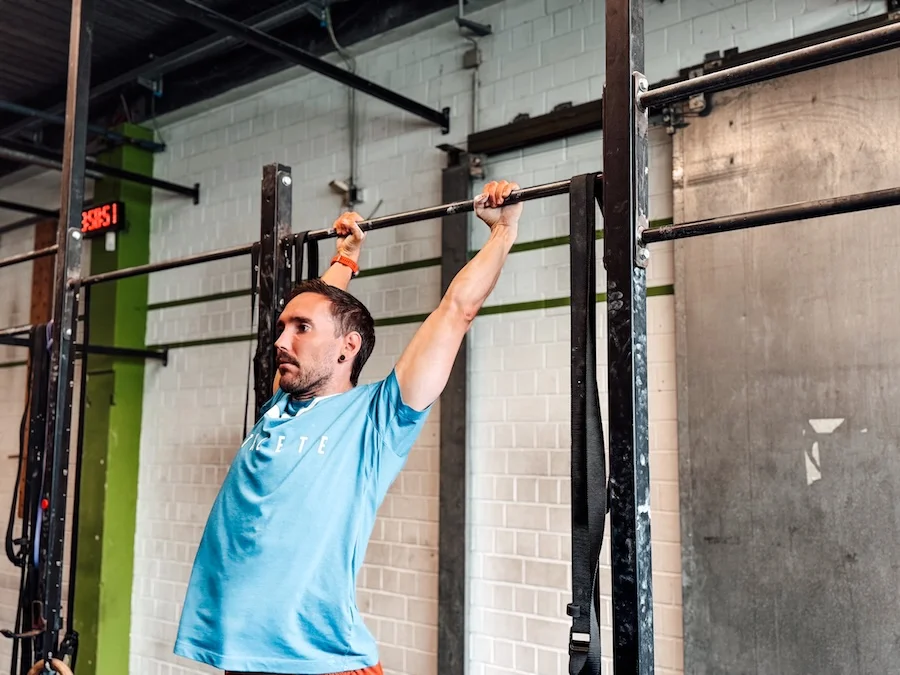
A pull-up is a vertical pulling motion in which you pull your body up to a bar using your upper-body muscles.
Unlike exercises such as rowing or lat pulldowns, you're not moving an external weight, but rather your own body weight. That's exactly what makes pull-ups so challenging.
For each repetition, you must:
stabilize your body
use your grip strength
generate pulling force in your back
keep your core engaged
This makes pull-ups one of the most effective upper-body exercises there is.
Pull-ups vs. Chin-ups: What's the Difference?
In everyday language, the terms are often used interchangeably. Strictly speaking, however, there are differences.
Pull-up
Overhand grip (pronated grip): Palms facing away from you
Greater focus on the back and latissimus dorsi
Chin-up
Underhand Grip (Supinated Grip)
Palms facing toward you
Slightly greater involvement of the biceps
Both variations work similar muscle groups and are part of the pull-up family.
Which muscles do pull-ups work?
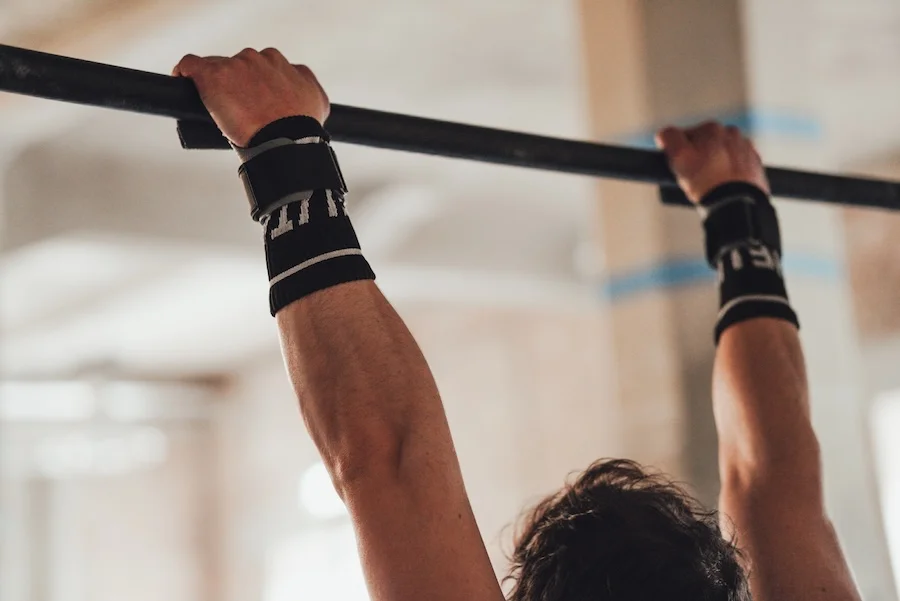
When people think of pull-ups, many think of the biceps first. While the biceps are indeed involved, they are by no means the most important muscle in the movement. Pull-ups are, in fact, a complex full-body exercise for the upper body.
Latissimus: The Main Driving Force Behind the Movement
The most important muscle used in pull-ups is the latissimus dorsi, often referred to simply as the “lat.”
This is the large back muscle that runs along the sides of the back and is responsible for the typical V-shape of the upper body.
His main task during a pull-up: pulling his upper arm down and back. Without a strong latissimus dorsi, clean pull-ups are practically impossible.
Arms and grip strength
Of course, the arms also play an important role. These include, in particular:
Biceps
Brachialis
Forearm muscles
Grip strength, in particular, is often underestimated.
Many athletes fail not because of their back muscles, but because they can't hold onto the bar long enough.
Shoulders and upper back
In addition, numerous muscles in the upper back and shoulders are involved. These include, among other things:
Trapezius
Rhomboids
Posterior shoulder muscles
Rotator cuff
These muscles stabilize the shoulder and ensure controlled movement.
Core and Body Tension
A proper pull-up isn't just an arm or back exercise. To keep your body from swinging uncontrollably, your core has to be engaged at all times.
The abdominal muscles, back extensors, and hip muscles help maintain a stable position throughout the entire movement.
The more challenging the variation becomes, the more important body tension becomes.
How to Do a Pull-Up: Here's How to Perform a Proper Pull-Up
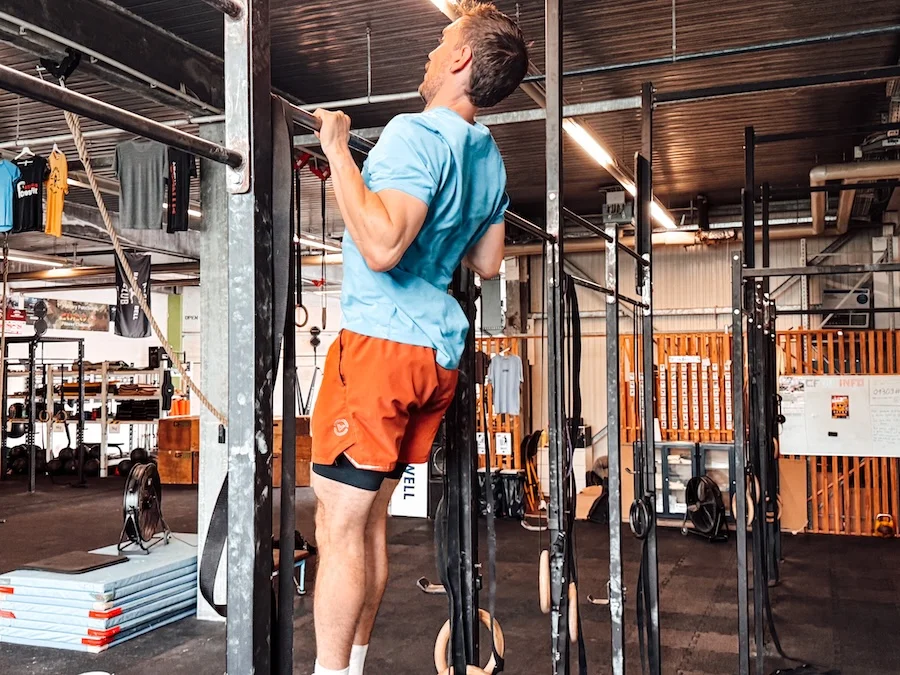
Even though pull-ups may look simple at first glance, there's a lot of technique involved in performing a good rep.
The Starting Point
The movement begins on an incline. Grip the bar slightly wider than shoulder-width apart and hang beneath it with your arms straight.
Important: Don't let your shoulders rise completely “loosely” upward. Instead, create a slight underlying tension in your shoulder blades.
The Pull Phase
Now pull your body up in a controlled manner. Many beginners make the mistake of pulling exclusively with their arms. Instead, remember to move your elbows downward and actively engage your shoulder blades. This will allow you to engage your latissimus dorsi much more effectively.
The Top Position
In a classic pull-up, your chin is above the bar. Avoid doing the following:
excessive arching of the lower back
frantic movements
“sticking out your chin” just to count the reps
The final position should be reached in a controlled manner.
The Controlled Downward Movement
The downward movement is just as important as the upward movement. Don't just let yourself fall; instead, lower your body in a controlled manner until your arms are fully extended again.
This eccentric phase contributes significantly to strength development.
The Most Important Pull-Up Variations in Functional Fitness
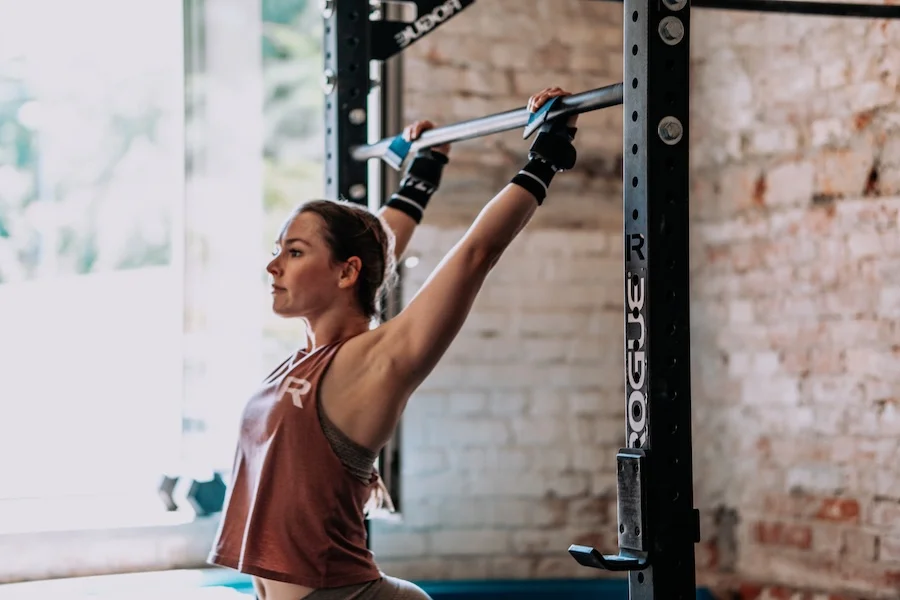
In Functional fitness and CrossFit, there isn't just “one” pull-up. Different variations are used depending on the goal, workout, or competition.
Strict Pull-up
The strict pull-up is the classic and technically most precise form of the pull-up. The entire movement is performed using only muscle strength. No momentum, kipping, or assistance from the hips.
The strict pull-up is considered the foundation for all other variations. If you want to develop healthy and strong pull-ups over the long term, you should start by building a solid foundation here.
Kipping Pull-up
The kipping pull-up uses momentum from the hips and upper body to make the movement more efficient. You alternate between what are known as the “hollow” and “arch” positions, thereby creating forward and backward motion. This momentum supports the pulling phase.
It’s important to understand that the kipping pull-up is not a “simple pull-up.” It requires additional skills such as:
Timing
Body Tension
Coordination
Therefore, there should first be a sufficient foundation of strength.
Butterfly Pull-up
The butterfly pull-up is the fastest and most efficient pull-up variation in competition. Instead of building up momentum again after each repetition, the body moves in a continuous circular motion. This allows for significantly more repetitions to be completed in a shorter amount of time.
Chest-to-Bar Pull-up
For a chest-to-bar pull-up, it’s not enough to simply bring your chin above the bar. Instead, your chest must touch the bar—or at least get significantly closer to it. This significantly increases the range of motion, making the exercise more challenging and placing greater demands on your pulling strength and technique.
Weighted Pull-up
In the weighted pull-up, additional weight is used—usually in the form of a weight belt or a weight vest. This variation is often used to build maximum pulling strength. For many athletes, the weighted pull-up represents the next step in their progression after the strict pull-up.
Are you unsure what the different variations look like or what you should pay attention to when performing them? In the exercise library of the SmartWOD Workout Generator, you'll find video tutorials and explanations for pull-ups, chest-to-bar pull-ups, and many other functional fitness exercises. This way, you can watch the movements step by step and specifically improve your technique.
Scaling Pull-Ups: Here Are Some Alternatives to Pull-Ups
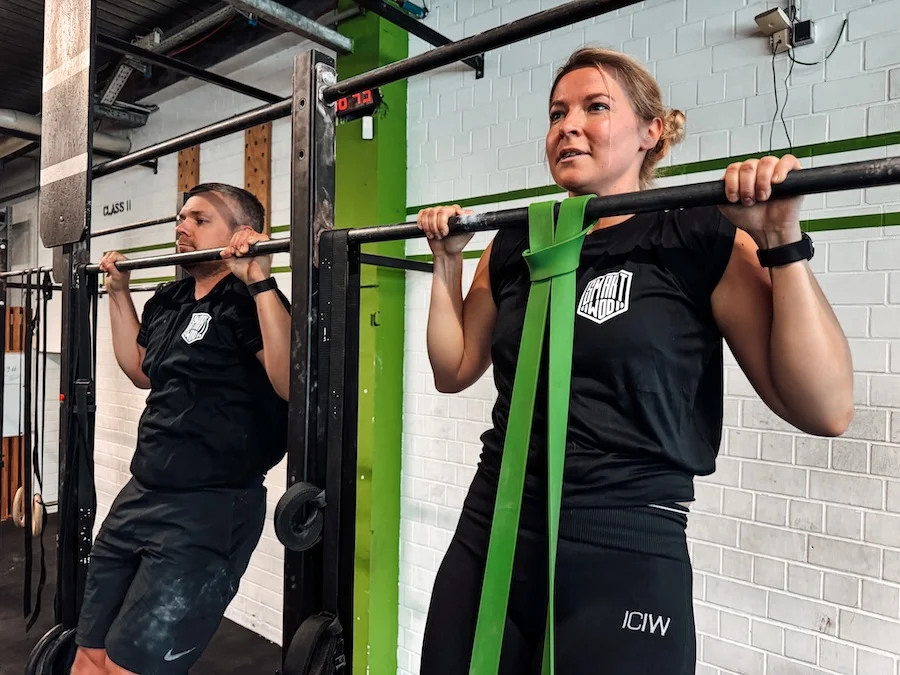
Not everyone can do a full, proper pull-up right away. That's exactly why there are different ways to scale the exercise.
Ring Rows: These are among the most popular pull-up variations in functional fitness. Since your feet remain in contact with the ground, you can adjust the intensity to suit your individual needs. At the same time, you work many of the same muscle groups as you would with a pull-up.
Band-Assisted Pull-ups: Here, a resistance band assists the upward movement. This takes some of the body weight off your shoulders, making the movement easier.
Jumping Pull-ups: In this variation, you use a small jump to reach the top position. This is followed by a controlled lowering phase. This makes the exercise particularly effective for building pulling strength.
Negative Pull-ups: You start above the bar and focus exclusively on the slow lowering phase. This variation is excellent for building the strength needed to perform your first full pull-up.
Common Mistakes When Doing Pull-Ups
Pull-ups may seem simple, but they are one of those exercises where mistakes can easily creep in. Common mistakes include:
Too much pull from the arms: The most common mistake is treating the pull-up as purely an arm exercise. Anyone who tries to pull themselves up using only their arms is wasting enormous potential. The latissimus dorsi should do most of the work.
Lack of core engagement: Without active core engagement, strength is lost. Especially with kipping and butterfly variations, it becomes clear how important a stable hollow position is.
Starting kipping or butterfly pull-ups too early: Many athletes want to move on to these spectacular variations as quickly as possible. However, they often lack the necessary foundational strength. A solid foundation built on strict pull-ups almost always pays off in the long run.
Neglecting shoulder health: Pull-ups place significant stress on the shoulders and shoulder joints. That’s why mobility, stability, and proper form are crucial for long-term healthy training.
Why Pull-Ups Deserve Their Reputation as the “King of Exercises”
There’s a good reason why pull-ups are among the best-known and most challenging exercises in functional fitness.
They simultaneously work your back, arms, shoulders, grip strength, and core, and can be adapted to any fitness level.
Whether you’re just aiming for your first pull-up or are already working on butterfly pull-ups, the ability to pull your own body up to a bar in a controlled manner remains one of the most impressive and effective feats in functional fitness.