Want to take your CrossFit skills to the next level? Gymnastics in CrossFit isn't just about a series of impressive tricks and movements. It also helps you build a strong connection between body and mind, maximize your performance, and prevent injuries.
In this article, we’ll take a deep dive into the world of gymnastics in CrossFit and explain why it’s so important and how you can improve your skills in this area.
What role does gymnastics play in CrossFit?
CrossFit is known for its diverse training methods—ranging from high-intensity conditioning to Olympic weightlifting.
But at the heart of CrossFit lies gymnastics—a discipline that has played a central role since CrossFit’s inception.
The integration of gymnastics into CrossFit is rooted in the belief that control over one's own body forms the foundation for all forms of strength and fitness.
Why gymnastics?
The gymnastics exercises in CrossFit are designed to improve your body control, flexibility, core strength, and balance. They teach you how to effectively manage your body weight, which is essential for performing complex movements and achieving new fitness goals.
Gymnastics not only promotes physical fitness, but also sharpens your mental discipline and stamina.
Typical calisthenics exercises in CrossFit
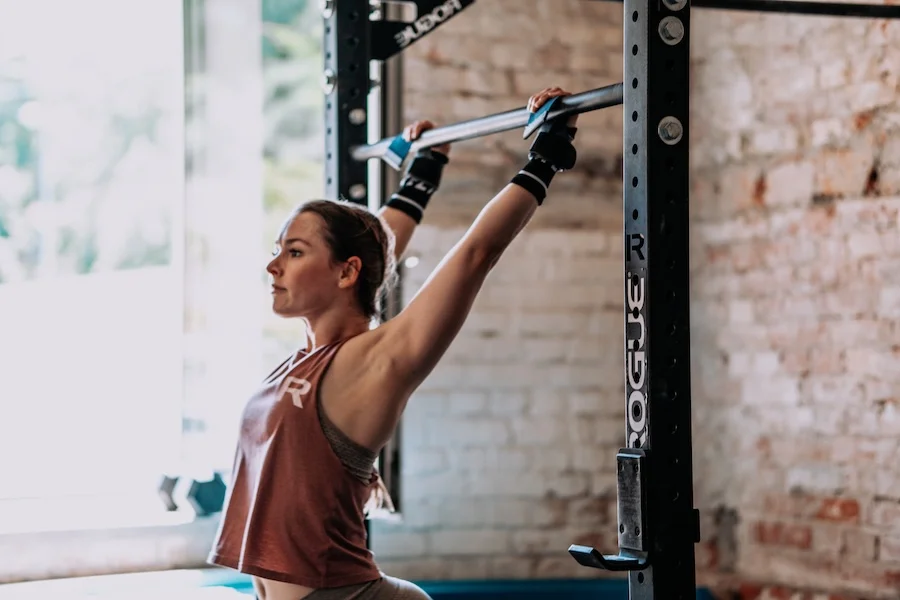
CrossFit incorporates a wide variety of gymnastic exercises designed to improve your functional mobility, strength, and body control.
These exercises are not only essential for building a solid foundation of fitness, but they also help you perform complex movements efficiently and safely.
Here are some of the most common calisthenics exercises you'll find in a CrossFit workout:
Pull-ups
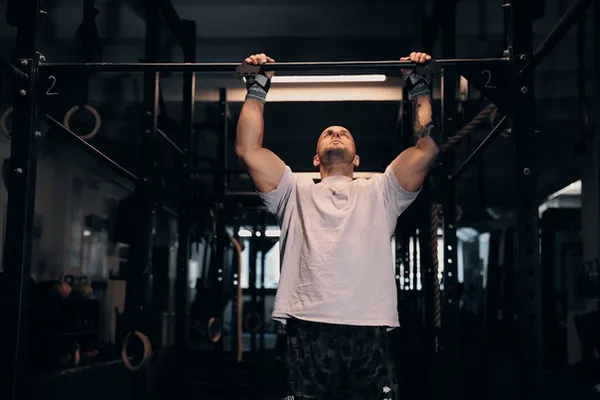
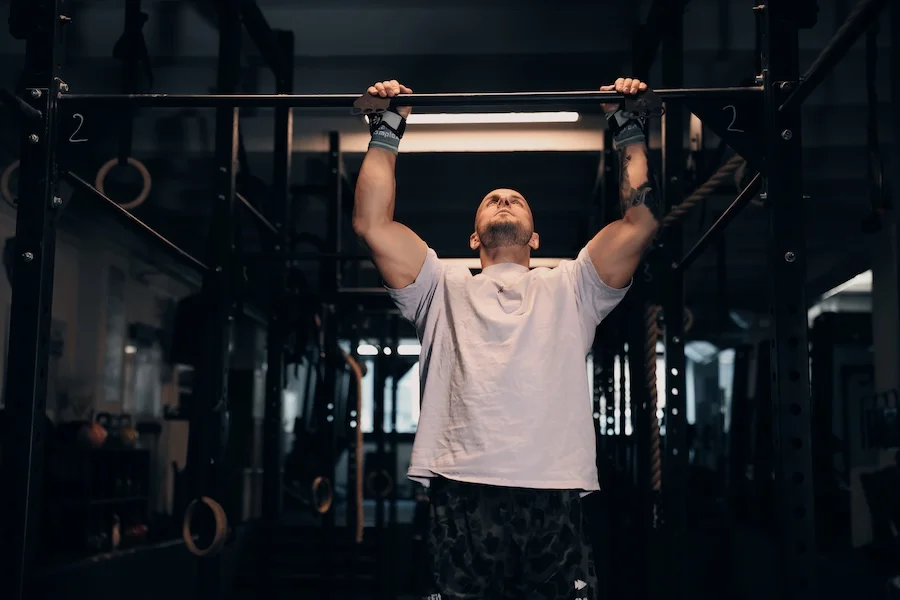
Pull-ups are a cornerstone of CrossFit and help you build upper-body strength, particularly in your back, shoulder, and arm muscles. They also improve grip strength, which is essential for many other CrossFit movements.
Push-ups
Push-ups strengthen the chest, shoulders, and triceps. By performing different variations, such as diamond push-ups or archery push-ups, you can target specific muscle groups and adjust the intensity of the exercise.
Toes-to-Bar
This exercise really works your abs and hip flexors. Toes-to-bar improves the core stability and control you need for many other CrossFit exercises.
Handstand Push-ups
Handstand push-ups are an advanced exercise that not only requires considerable shoulder strength but also a high degree of balance and body control. They are excellent for improving upper-body stability.
Muscle-ups
Muscle-ups are a combination of a pull-up and a dip, performed on the rings or on a bar. They are considered one of the most challenging gymnastic exercises in CrossFit and require strength, technique, and coordination.
Pistols
Pistol squats are an advanced variation of the squat performed on one leg. They improve your balance, flexibility, and strength in your legs and lower back.
Burpees
Although they are often considered a full-body conditioning exercise, burpees also incorporate many elements of gymnastics—jumping power, flexibility, and the ability to move your body efficiently. They are a staple of many CrossFit workouts.
Differences from traditional gymnastics
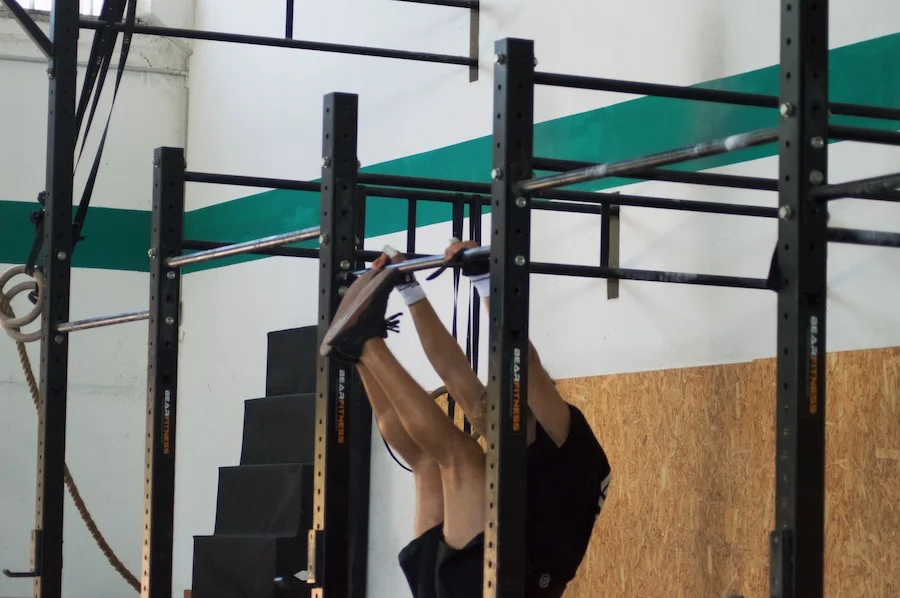
The gymnastics practiced in CrossFit differs in several key ways from the traditional gymnastics you’re familiar with from physical education classes or Olympic competition.
These differences are evident not only in the movements and exercises themselves, but also in the philosophy and objectives underlying the incorporation of gymnastics into CrossFit training.
Focus on functionality
CrossFit
The focus is on functional movements that improve your overall fitness and performance. The exercises are designed to build strength, flexibility, endurance, and coordination in a way that directly translates to everyday movements and other athletic activities. The movements are often scaled and adapted to accommodate a wide range of abilities and fitness levels.
Traditional gymnastics
It focuses on a series of specific, highly technical movements and routines that often require years of training to master. The emphasis is on precision, aesthetics, and the execution of movements according to established criteria that are evaluated in competitions.
Training environment and community
CrossFit
The training often takes place in a group setting. The diversity of participants in terms of age, fitness level, and goals contributes to an inclusive and motivating training environment. This allows each participant to push their own limits.
Traditional gymnastics
Training is often individualized or conducted in small groups, with a strong emphasis on technical perfection and competition preparation. The training environment can be intense and competitive, with athletes being specialized and trained for high performance from a young age.
Objectives and Evaluation
CrossFit
The assessment is based on performance, including the number of repetitions, speed of execution, and the ability to perform complex movements while fatigued. The goal is to improve overall fitness and achieve personal bests.
Traditional gymnastics
Performance is evaluated according to strict criteria that take into account precision, technique, aesthetics, and the complexity of the routines performed. The goal is often to compete in competitions and win medals or awards.
Incorporating Calisthenics into CrossFit Workouts
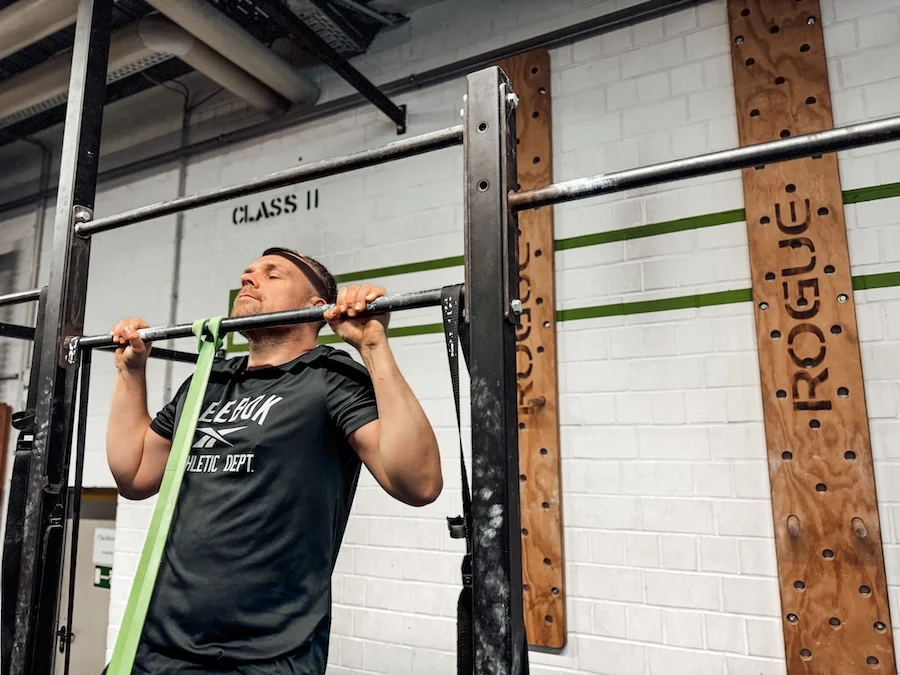
Incorporating calisthenics into your CrossFit routine might seem daunting at first, especially when you see technically challenging moves like muscle-ups or handstand push-ups.
The key lies in gradual progression and the understanding that everyone, regardless of their fitness level, can benefit from calisthenics.
Examples of workouts
Gymnastics exercises are a staple of many CrossFit workouts. Here are a few examples that show how gymnastics is incorporated into CrossFit routines:
Cindy: One of the most famous CrossFit “Girl” workouts, consisting of a 20-minute AMRAP (As Many Rounds As Possible) of 5 pull-ups, 10 push-ups, and 15 squats. This workout demonstrates how basic calisthenic movements are used to improve strength, endurance, and flexibility.
Mary: Another 20-minute AMRAP workout that includes more advanced calisthenics elements: 5 handstand push-ups, 10 pistols (single-leg squats), and 15 pull-ups. Mary challenges and improves your calisthenics skills and balance.
Training frequency and intensity
If you're a beginner, it's a good idea to gradually incorporate calisthenics into your workout routine. Start with two to three sessions per week. Focus on form and gradually increasing the intensity to prevent overexertion and injury.
Get Better at CrossFit Gymnastics
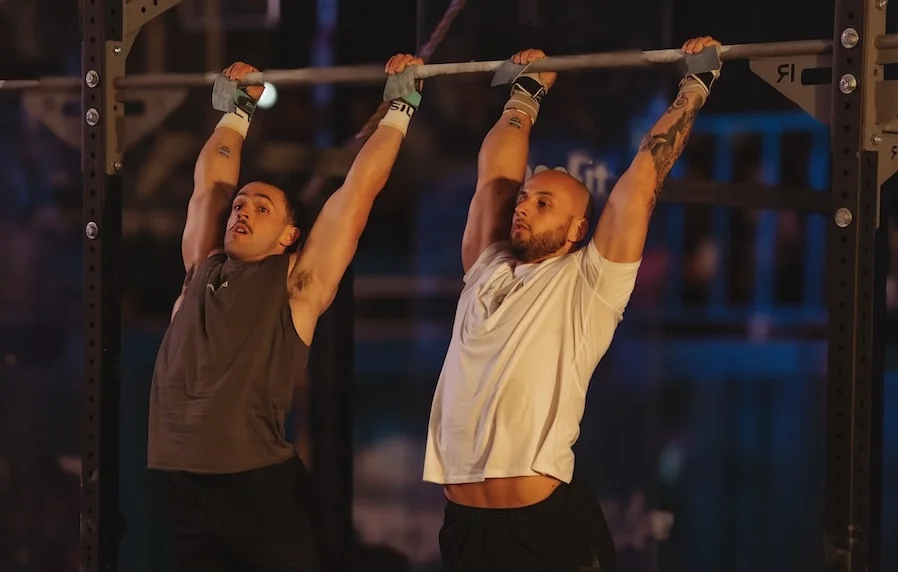
Improving your CrossFit gymnastics skills requires patience, practice, and sometimes a little creativity.
We have a few strategies that might help you:
Technique and Progression
Start with the basics: Master fundamental movements like pull-ups, push-ups, and squats before moving on to more complex exercises.
Use progression exercises: For advanced movements like muscle-ups, there are specific progression exercises that help you gradually build the necessary strength and technique.
Strength and Mobility Training
Supplement your workout: Supplement your regular CrossFit routine with specific strength and mobility exercises designed to improve your gymnastics skills.
Mobility Routine: Invest time in a regular mobility routine to improve your range of motion and performance in gymnastics exercises.
Mental approach
Set realistic goals: Set achievable goals for your progress in gymnastics and celebrate your achievements, no matter how small they may be.
Stay patient and consistent: Making progress in gymnastics (especially if you've never done it before) takes time. Consistency is the key to success.
Gymnastics for CrossFit Beginners
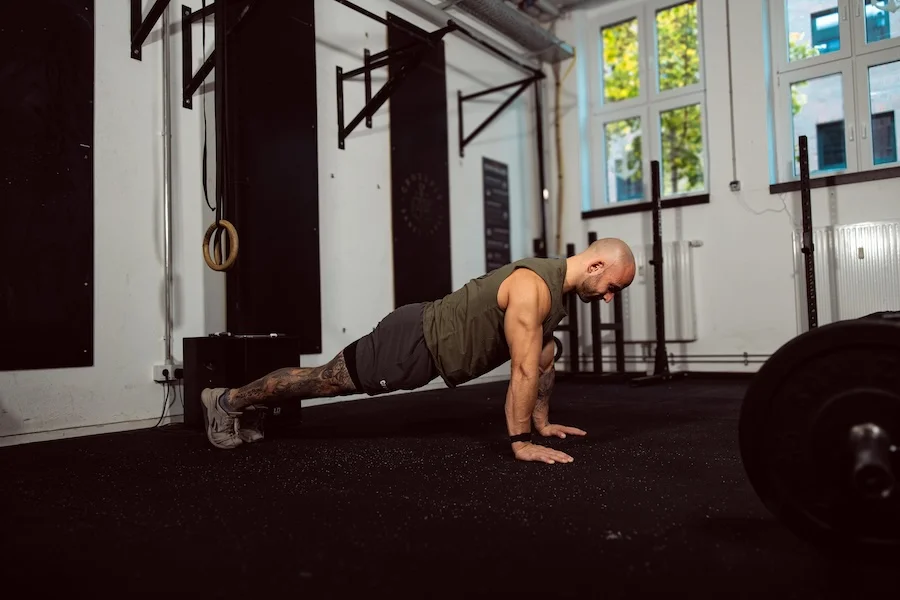
If you're just starting out with CrossFit, the idea of gymnastics can be intimidating. But don't worry—everyone has to start somewhere, and the key is to take it one step at a time.
Here are a few tips to help you get started effectively as a beginner:
Smooth implementation and scaling
Start small: Focus on the basics first. Exercises like squats, push-ups, and static hangs on the bar provide a solid foundation.
Use modifications: Modifications are adjustments to exercises that allow you to work on the movement even if you can’t perform the full form yet. For example, you can start with banded pull-ups or box push-ups.
Common Mistakes and How to Avoid Them
Overlooking technique: The most common mistake is underestimating the importance of technique. Focus on performing each movement correctly before increasing the intensity or the weight.
Rushing into things: Another mistake is trying to move on to complex exercises too quickly. This can not only be frustrating, but it can also increase your risk of injury. Take the time you need to master each skill level safely.
Tips for making progress
Be patient with yourself: Making progress in gymnastics takes time and patience. Every bit of progress, no matter how small, is a step in the right direction.
Regular practice: Consistency is key. Incorporate calisthenics into your routine on a regular basis to see steady improvement.
Ask for help: Don't hesitate to ask your coach for help or talk to more experienced CrossFitters. They can offer valuable tips and help keep you motivated.
Your Path to Success in CrossFit
Gymnastics is an ongoing exploration of your physical and mental limits. It’s not just about how many muscle-ups you can do or how long you can hold a handstand.
Rather, it is a journey through which you learn to trust your body, refine your technique, and build overall strength.
By respecting the technique and patiently working on your strength and flexibility, you will make progress not only in gymnastics but in all aspects of your training.