When you start CrossFit, there's one topic you'll quickly come across: weightlifting.
Suddenly, terms like snatch, clean, and jerk appear. People are explosively lifting weights above their heads, and you may be wondering: Do I have to be able to do that too?
In short: yes—at least a little bit. But you don't have to become an Olympic weightlifter to do so.
In this article, we will look at:
Why weightlifting is so important in CrossFit
How it differs from classic Olympic weightlifting
How often you should train
And which well-known workouts include weightlifting
Why weightlifting is a central part of CrossFit
CrossFit has a pretty clear goal: to make you fitter in as many areas as possible at the same time.
These include, among others:
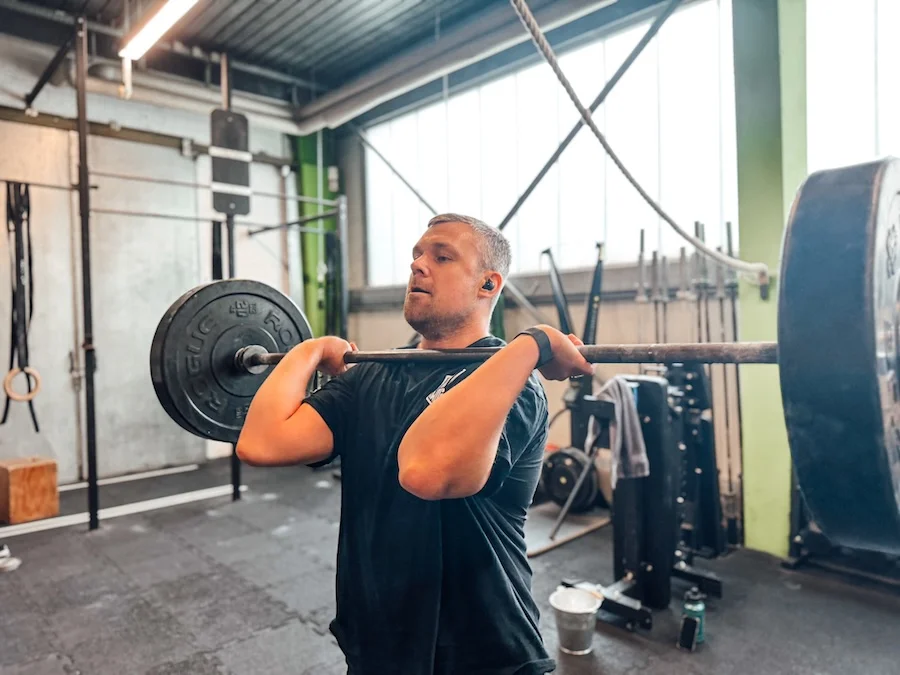
Weightlifting addresses many of these areas simultaneously. Olympic lifting movements such as the snatch or clean and jerk require a combination of:
Body control
Timing
Strength
So you're not just learning to lift heavy weights—you're learning to use your strength quickly and in a controlled manner. And that's exactly why weightlifting works so well in CrossFit: it transfers to many other movements and sports.
How does weightlifting in CrossFit differ from Olympic weightlifting?
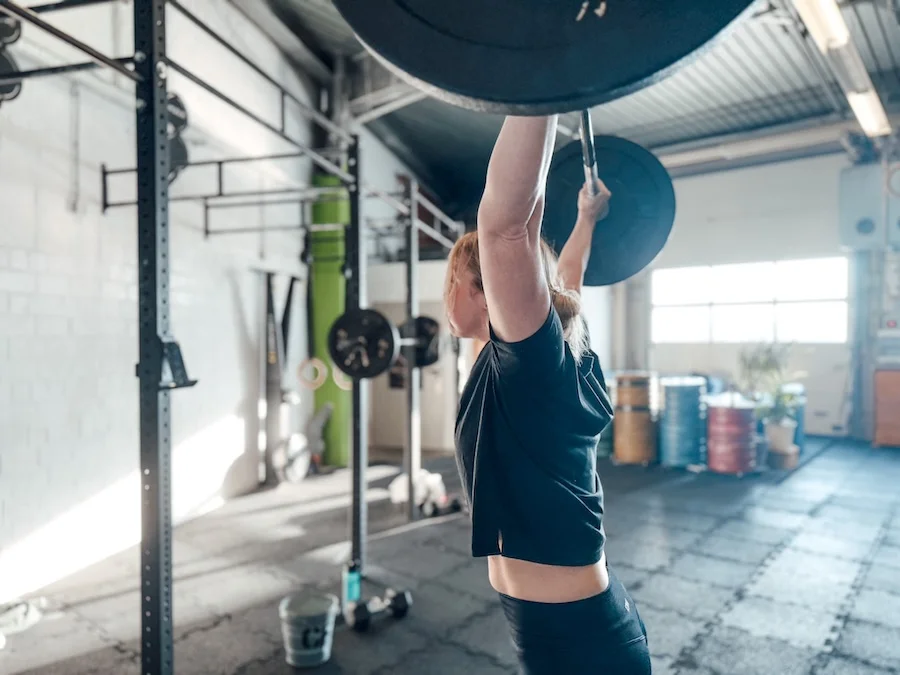
There is an important difference here.
Traditional Olympic weightlifting consists exclusively of two exercises:
Snatch
Clean & Jerk
Athletes train these movements for years with one goal in mind: to lift maximum weights with perfect technique.
CrossFit takes a slightly different approach. Here, weightlifting is a tool, not an end in itself. In addition to Olympic lifts, other strength exercises are therefore also included in training, for example:
In addition, weightlifting movements are often combined with other exercises—for example, in workouts with burpees, pull-ups, or rowing intervals. This makes training more varied, but also more demanding.
Lockout in CrossFit vs. weightlifting
One detail that repeatedly causes discussion is the so-called lockout – i.e., arms fully extended at the end of a lift.
In Olympic weightlifting, the rules are very strict: if the arms are not fully extended, the lift is considered invalid.
In CrossFit, this is often handled in a more pragmatic way: a clean lockout is of course still the goal, but in many workouts, the training stimulus is the main focus, not the perfect competition score.
This means that technology remains important, but the focus is more on training and progress.
How often should you train weightlifting?
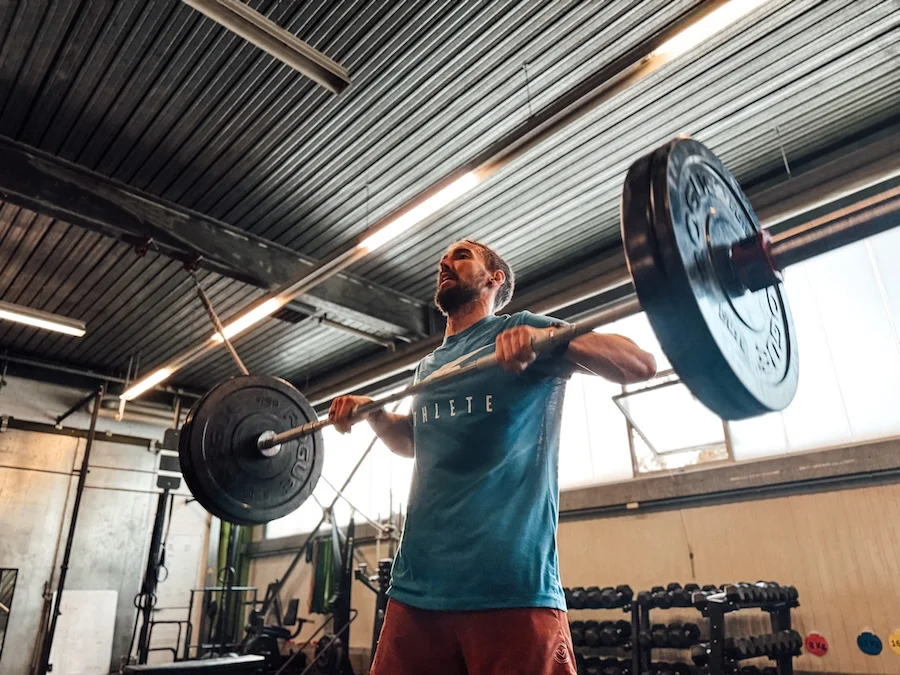
2–3 times per week works very well for most CrossFit athletes.
Why? Because weightlifting is important, but it is only one part of the overall training program. In addition to strength training, the program also includes:
Gymnastic exercises
With two to three sessions per week, you can improve your technique and strength without neglecting other areas of training.
If you want to structure your sessions, you can easily set intervals or training blocks with the SmartWOD Timer. This allows you to keep track of breaks and workout times without having to constantly check the clock.
How can one become better at weightlifting?
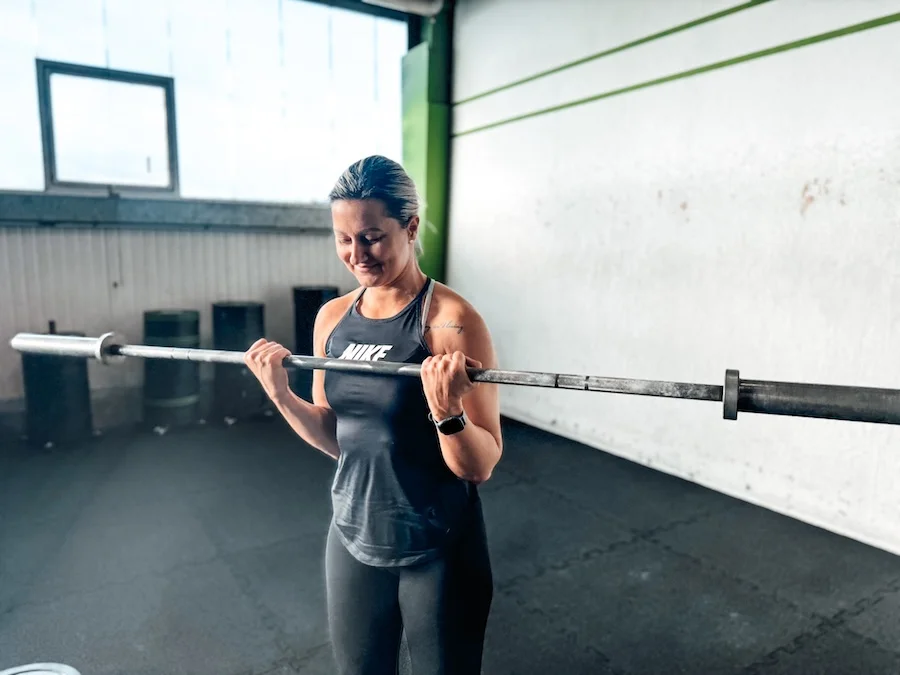
There are no shortcuts in weightlifting. Progress is not achieved overnight, but through many clean repetitions, patience, and a good feel for the movement.
The good news is that you don't have to be a pro to get significantly better. A few clear principles can make a big difference:
Technique first – weight comes later
The most common mistake at the beginning is wanting to lift heavy weights too quickly. In weightlifting, technique is what determines how efficiently and safely you train.
Therefore, work regularly with lighter weights or even just with the empty bar. This allows you to concentrate fully on the movement: clean positions, stable hips, controlled timing.
Many athletes film their lifts to analyze their technique. This can be extremely helpful because you can immediately see where small mistakes creep in.
Take assistance exercises seriously
You won't improve your snatch or clean by only doing snatches and cleans. A large part of your progress comes from so-called assistance exercises.
These include, for example:
Front squats for a strong and stable upright posture
Overhead squats for shoulder stability and mobility
Deadlifts for back and hip strength
Push press for explosiveness in the upper body
These exercises build the strength and stability you will need later in the Olympic lifts.
Train explosiveness
Weightlifting is not just about strength—it's mainly about fast strength. The ability to initiate a movement explosively often determines whether a lift is successful or not.
That's why exercises like these can also improve your weightlifting:
Jumps
Short sprints
They train exactly what you need for snatch or clean: fast hip extension and dynamics.
Train regularly, but not haphazardly
Consistency is more important than individual “hard” sessions. Two to three weightlifting sessions per week are sufficient for many CrossFit athletes to make progress.
If you want to structure your sessions, the SmartWOD Timer can help. You can use it to set technique intervals, breaks, or training blocks, for example, without having to constantly check the clock.
What are some well-known CrossFit workouts that involve weightlifting?
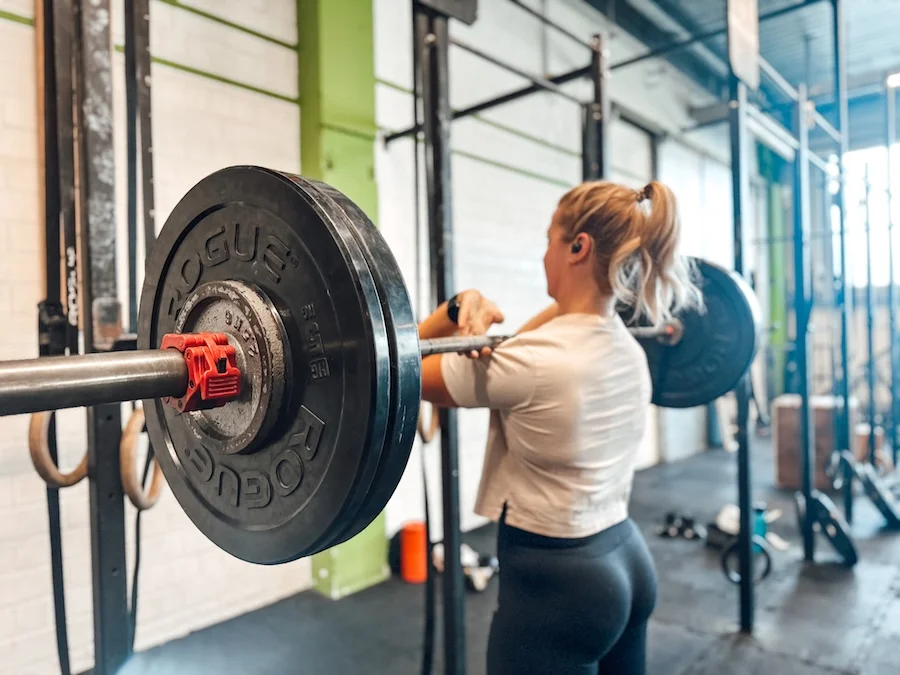
Weightlifting is not only part of the strength training component of CrossFit. Many of the most well-known CrossFit workouts combine weightlifting movements with high intensity and time pressure.
That's what makes it so exciting, because you need not only strength, but also technique, endurance, and a good rhythm.
Here are three classics that almost every CrossFit athlete will encounter sooner or later:
Grace
Isabel
DT
Grace
Grace is one of the best-known so-called “Girl workouts.” The workout is simple in structure—and that's exactly why it's so effective.
30 Clean & Jerks for Time
RX weights:
Men: 61 kg (135 lb)
Women: 43 kg (95 lb)
The appeal of Grace lies in the fact that you are moving a moderate weight as efficiently as possible. Many athletes try to find a rhythm and do several repetitions in a row instead of building up each repetition individually.
As a beginner, you should choose a weight that allows you to perform all repetitions with proper technique. Speed comes later.
If you want to try Grace yourself, you can use the SmartWOD Timer to time yourself and compare your progress later.
Isabel
Isabel is another classic benchmark workout—and a real challenge for many athletes.
30 Snatches for Time
RX weights:
Men: 61 kg (135 lb)
Women: 43 kg (95 lb)
Unlike Grace, Isabel requires even more technique because the snatch is one of the most complex movements in CrossFit. Especially under time pressure, it quickly becomes apparent whether your positions remain clean.
As a beginner, you can:
Reduce the weight
Use power snatches instead of squat snatches
or split up the repetitions
The focus should always be on controlled movement.
DT
DT is one of the so-called hero workouts. It is named after fallen US Air Force soldier Timothy Davis and combines several weightlifting movements.
5 rounds:
12 Deadlifts
9 Hang Power Cleans
6 Push Jerks
RX weights:
Men: 70 kg (155 lb)
Women: 48 kg (105 lb)
DT particularly challenges your ability to work efficiently with the barbell over several rounds. The key is to maintain a steady rhythm for as long as possible and not to burn out too early.
If you want to try out workouts like this more often, the SmartWOD Workout Generator can help. The app automatically creates workouts tailored to your available equipment and training time.
How high is the risk of injury when weightlifting?
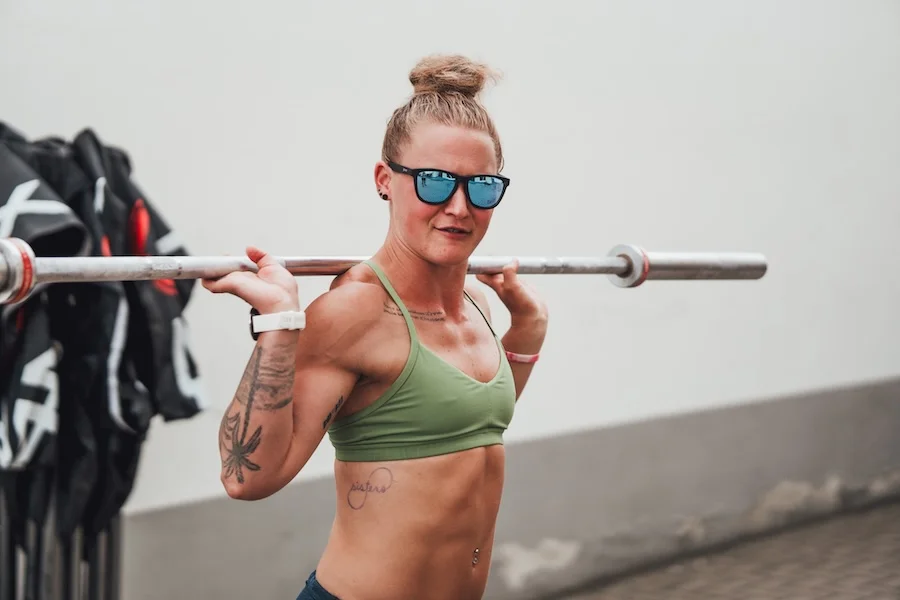
When it comes to weightlifting, many people immediately think of a high risk of injury. After all, it looks spectacular when heavy weights are lifted explosively above the head. However, the reality is somewhat more nuanced.
Studies show that weightlifting—especially Olympic weightlifting—can be relatively safe forms of exercise when performed correctly. In many cases, the risk of injury is even lower than in traditional team sports such as soccer or basketball.
The key point is: Technique and training control make all the difference.
How to reduce your risk of injury
You can significantly reduce the risk by following a few simple principles.
1. Learn the technique properly
Especially with complex movements such as snatch or clean, it is worth working with lighter weights and really understanding the movement. Good technique not only ensures safety, but also more efficient lifts.
2. Take time for your warm-up
A good warm-up prepares your muscles, joints, and nervous system for exercise. Mobility exercises are particularly important for:
Shoulders
Hips
Ankles
3. Increase weights gradually
More weight is not automatically better. If you increase your loads slowly, your body can adapt better and you avoid unnecessary strain.
4. Make sure you get enough rest
Your body does not become stronger during training, but afterwards. Adequate sleep, good nutrition, and regular rest days are crucial for muscles and joints to regenerate.
Weightlifting in CrossFit: Your foundation for greater strength
Weightlifting is one of the most important components of CrossFit. It combines strength, technique, and explosiveness—and helps you develop as an athlete overall.
You don't have to become a pro to do this. The only important thing is:
Take technique seriously
Train regularly
Remain patient
With two to three weightlifting sessions per week, you will lay a strong foundation for your entire CrossFit training.
And with tools such as the SmartWOD Timer or the Workout Generator, you can structure your training without having to spend a lot of time planning.