If you've ever done thrusters, you know: The exercise looks easier than it feels.
You pick up a weight, squat down, press it above your head—and suddenly your heart rate is up, your legs are burning, and nothing feels relaxed anymore.
That's exactly what makes thrusters so exciting. You can't isolate and hide anything. Either your legs, core, and shoulders work together, or every rep becomes unnecessarily tough.
We reveal what makes this exercise so challenging, what it's good for, and how you can perform the thruster in a way that feels controlled—even if it remains strenuous.
What is a thruster?
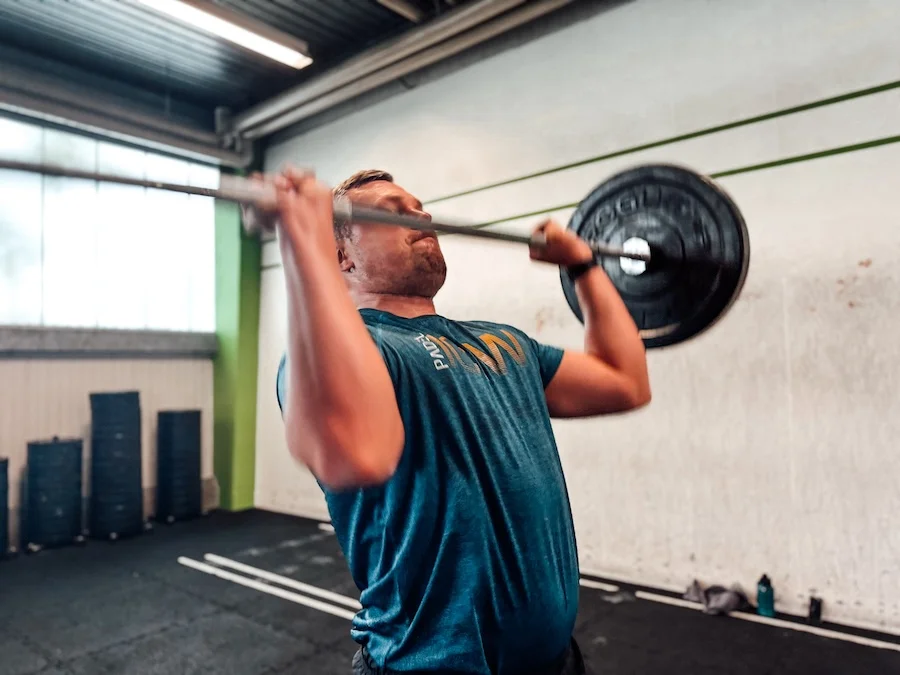
A thruster is a combination of a front squat and a push press in one fluid motion. You squat with the weight and use the momentum from your legs to press the weight directly above your head.
Important: These are not two separate exercises, but one continuous movement. The smoother the transition from legs to upper body, the more efficient the thruster will be.
It is precisely this combination that makes the exercise so challenging. You cannot rely on a single muscle. Everything has to work together: legs, core, shoulders, arms – and your timing.
Why are thrusters so effective?
Thrusters are effective because they demand a lot at once—and leave little room for you to hide.
What makes them so effective:
Large muscle groups work simultaneously: Legs, core, shoulders, and arms are involved in every repetition. No part can take a break.
Power must be transferred: The energy comes from the legs and must be transferred cleanly through the torso to the arms. If tension or timing is lacking, power is immediately lost.
The heart rate rises extremely quickly: Even with moderate weights, thrusters quickly push the heart and breathing to their limits. You train strength and resilience at the same time.
Hardly any room for error: weaknesses can hardly be hidden with thrusters. If squats, core tension, or overhead presses don't work together, every repetition becomes inefficient.
Big impact in a short time: one exercise, one weight, one movement sequence—and the whole body works at the same time.
In short: Thrusters work so well because they don't forgive weaknesses. Only when your legs, torso, and upper body work together does the movement feel controlled.
Which muscles do I train with thrusters?
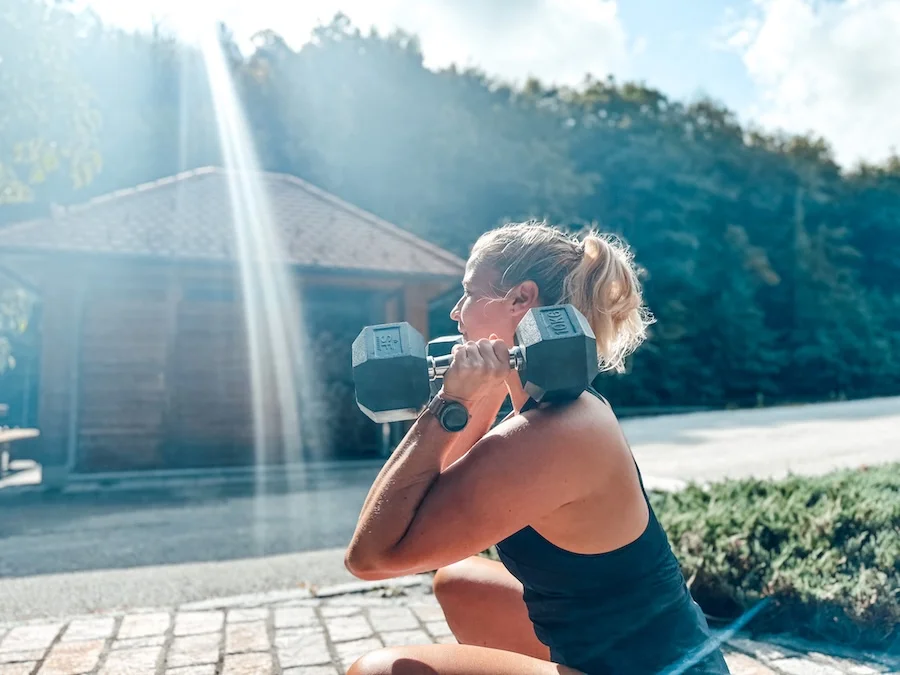
Thrusters are a genuine full-body exercise. Nevertheless, it is worth understanding which muscles perform which tasksin order to maintain proper technique.
Legs – the engine of movement
With thrusters, most of the power comes from your legs. They lift you out of the squat position and provide the energy you then use for the overhead press.
If you use your legs consistently, the thruster will feel controlled and fluid. If not, your shoulders and arms will have to do too much work—and that's when the exercise becomes unnecessarily difficult.
Therefore, the better your footwork, the easier everything that comes after will be.
Core – the connection
The core holds the thruster together. It ensures that the power from the legs is transferred cleanly upwards.
Without active core tension, energy is lost: the upper body tilts forward or arches, your weight feels unstable, and each repetition becomes more strenuous than it needs to be. A stable core makes the thruster efficient.
Shoulders – the overhead press
The shoulders take over the task of pressing the weight above the head and holding it there in a stable position.
It is important to note that the shoulders do not work in isolation. They benefit from the momentum generated by the legs. If you try to push the weight up using only your shoulders, the thruster will quickly feel like a heavy shoulder press—and lose its actual character.
Arms – Support, not primary work
The arms help to extend and secure the weight in the end position. They support the movement but are not the main driving force.
If thrusters feel like an arm workout, the transition from the squat is usually incorrect. This means that too little force is coming from the legs and too much load is remaining at the top.
What equipment do I need for the thruster?
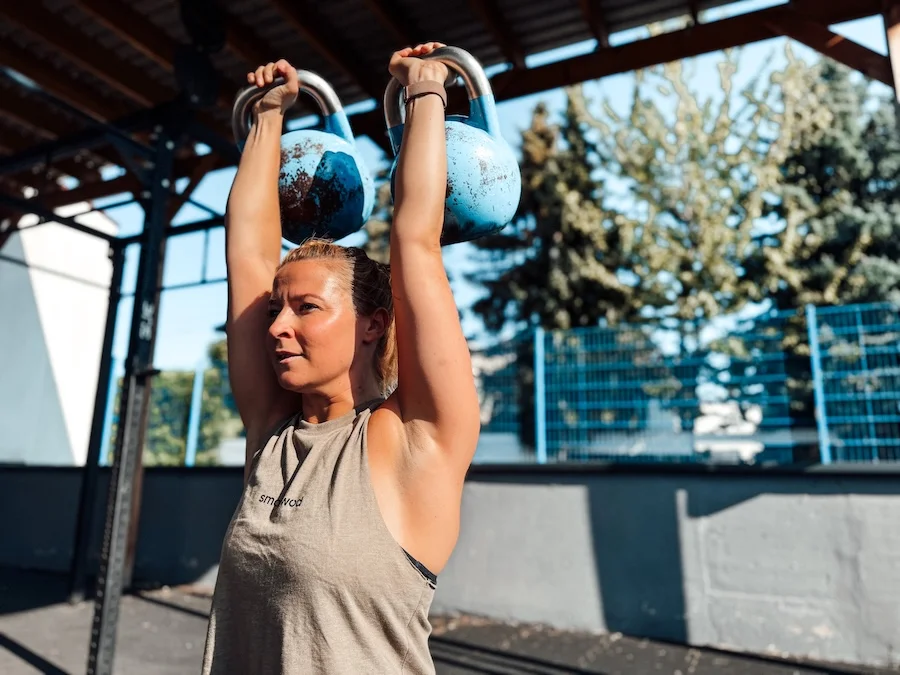
The beauty of the Thruster: you don't need any special setup.
The exercise works with different equipment—and each one brings a slightly different focus. The decisive factor is not the “right” device, but that you can perform the movement cleanly.
Thrusters with barbells: The classic version. With barbells, you can work with heavier weights and learn to transfer power cleanly from your legs through your torso to your arms. This requires a lot of core stability and a good front rack position. Technically demanding, but very effective.
Thrusters with dumbbells: Dumbbell thrusters are often more accessible. Each side works individually, which requires greater coordination and shoulder stability. They are also easier to handle if mobility or handling the barbell is still an issue.
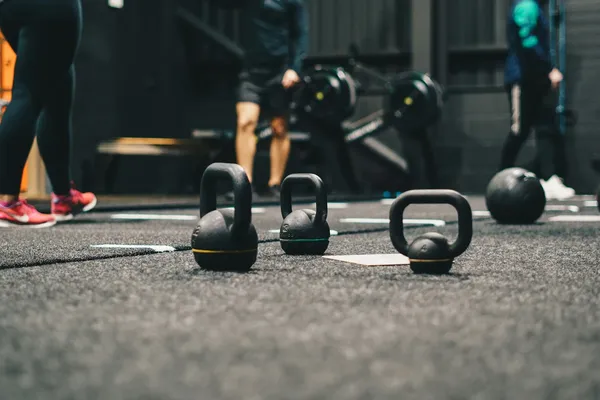
Thrusters with kettlebells: Kettlebell thrusters feel more compact. The position of the weight in front of the body shifts the center of gravity slightly, which particularly challenges the core. Very well suited for controlled, fluid repetitions.
How do I perform a thruster correctly?
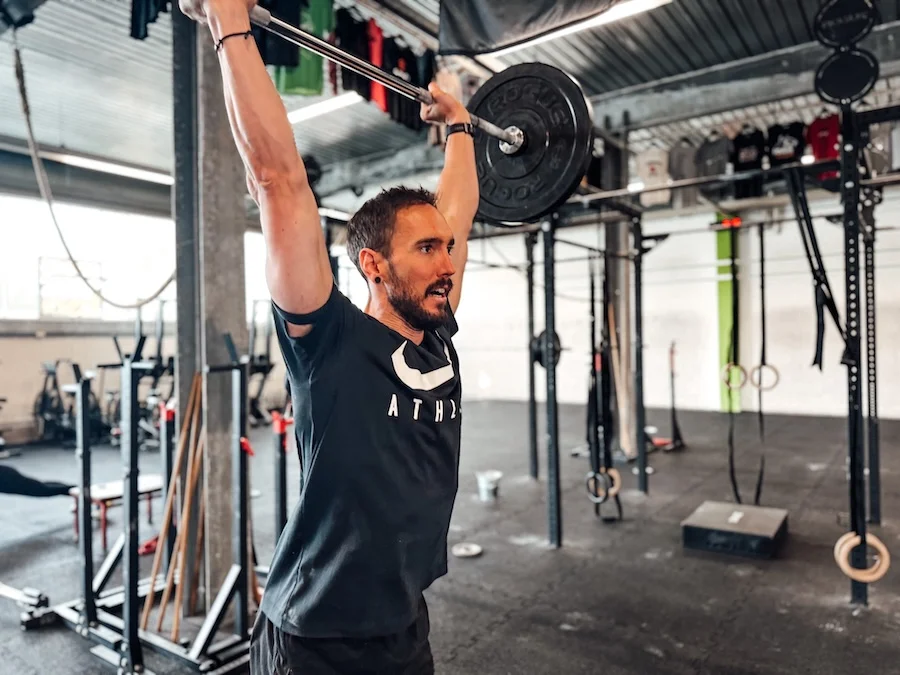
With thrusters, technique determines whether the exercise is efficient or simply chaotic and exhausting. The goal is a fluid movement in which power is transferred cleanly from the legs to the upper body.
1. Starting position
The weight is in the front rack position (barbell on the shoulders, dumbbells or kettlebells at shoulder height).
The elbows point slightly forward, not down.
Feet are about shoulder-width apart, weight over the midfoot.
Core is engaged, chest upright.
This position is the basis. If it is unstable, the entire thruster becomes inaccurate.
2. The Squat
Lower yourself into a squat in a controlled manner.
Your hips should move downwards, not backwards.
Your knees should follow the direction of your toes.
Keep your upper body as upright as possible.
Important: This is a real squat, not a half dip. The cleaner the bend, the easier the transition upwards will be.
3. The transition – the decisive moment
From the lowest position, initiate the movement explosively from your legs. First, fully extend your knees and hips. Your arms should remain passive.
This is the most common mistake: pushing with your arms too early. The power comes from your legs first.
4. Overhead press
Once your legs are stretched out, your arms take over:
Press the weight in a straight line above your head.
Extend your arms completely.
Your head moves slightly forward under the weight so that it is above the center of your body.
You are stable at the top, not overextended. The core remains active.
5. Return to the starting position
Lower the weight back onto your shoulders in a controlled manner.
Catch it steadily, keep your upper body upright, and go straight into the next squat.
Keep your core stable and your upper body upright.
From here, you start the next squat for the next thruster.
Why the thruster is more than just a combination exercise
The thruster is one of the most effective movements for combining strength, coordination, and endurance in a single exercise.
If you do it correctly, you will learn:
Transferring force efficiently
Maintaining tension throughout the body
Working in a controlled manner even under stress
Thrusters quickly show you where the problem lies – and that's exactly why they help you move forward.