You’re probably already using the push press in your workouts—but are you doing it right?
Many people do this exercise regularly—without really thinking about what’s actually happening. It sort of works, after all.
The difference only becomes apparent when you take a closer look: How much of the work actually comes from your legs? And why do some reps feel significantly easier than others—even though the weight is the same?
In this article, we’ll reveal why small details make a big difference in the push press. Because when you perform it cleanly, you can lift more weight, work more efficiently, and have significantly more control over every rep.
What exactly is a push press?
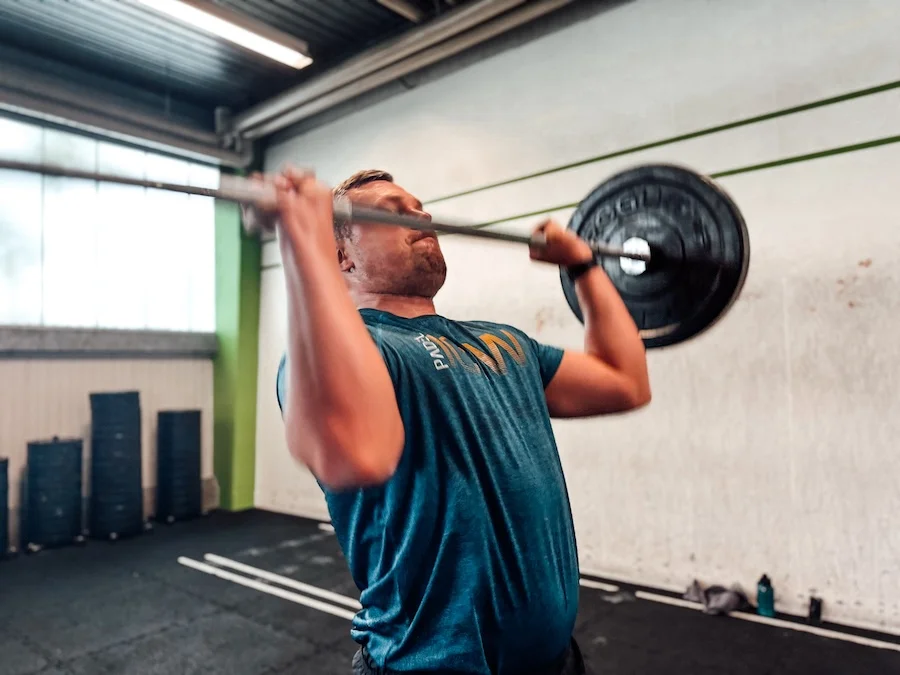
To put it simply: The push press is an overhead movement in which you lift a barbell (or dumbbell or kettlebell) from your shoulders in a controlled manner.
At first glance, it looks like a classic shoulder press—with one small difference that completely changes the exercise: You use your legs.
Before you press the barbell upward, you bend your knees slightly and then explosively extend upward. This movement gives the barbell an impulse, which you carry through with your arms until it is stable above your head. It is precisely this interaction that defines the push press.
You’re not working in isolation, but rather connecting your lower and upper body in a single movement. When the timing is right, the push press doesn’t feel like a simple press, but rather like a fluid transfer of power—from the bottom to the top.
And that’s exactly why you can lift more weight here than with a strict press.
Push Press vs. Strict Press – When Does Each Make Sense?
Both exercises look similar, but feel completely different.
The key difference is simple: In the Strict Press, only your shoulders do the work. In the Push Press, your legs help out.
Strict Press
You press the dumbbell overhead without using momentum.
This means:
more focus on shoulder and tricep strength
slow, controlled movement
less weight possible
The Strict Press is ideal if you want to specifically build pure strength in your upper body.
Push Press
Here, you use a quick burst of power from your legs.
This means:
you lift more weight
the movement is more dynamic
you also work on timing and explosiveness
The push press is useful if you want to lift more weight, become stronger overhead, and improve movements like thrusters or jerks.
When should you do what?
It's simple:
Strict Press → if you want to get stronger in a targeted way
Push Press → if you want to combine strength and explosiveness
The best approach is to combine both. The Strict Press builds the foundation, while the Push Press takes you beyond that.
Which muscles are engaged during the push press?
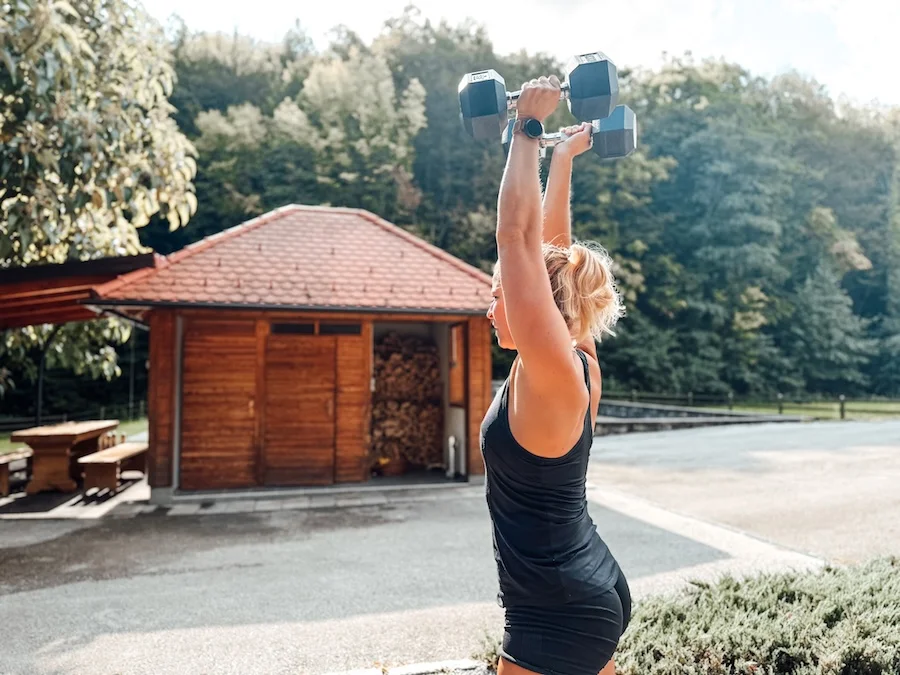
The push press is a full-body exercise—but not all muscles contribute equally.
The legs are the starting point of the movement. They generate the momentum that sets the barbell in motion in the first place. Without this component, the push press quickly turns into a poor strict press.
The shoulders take the lead once the barbell has been accelerated upward. They ensure that the weight is brought over the head in a controlled manner.
The triceps fully extend the arms and stabilize the end position.
And the core holds everything together. Without a stable core, you lose tension, arch your back, or lose control of the barbell.
So the key isn’t which muscle “works the hardest,” but how well they work together.
Push Press: The Proper Technique – Step by Step

It’s worth taking a closer look here. Because even small mistakes can make a big difference in the push press.
Starting Position
The barbell is in the front rack position on your shoulders. Your hands are gripping the bar slightly wider than shoulder-width apart, with your elbows slightly in front of the bar. Your upper body is upright, and your core is engaged.
You are standing with a stable stance—neither too wide nor too narrow. A position that allows you to transfer force in a controlled manner.
The Dip: Short, Controlled, Straight
The dip is not a half squat. It is short, smooth, and controlled.
You lower yourself slightly, keeping your upper body upright and letting your knees move slightly forward. The movement stays vertical—you don’t want to tip forward
Many make their first mistake here: going too deep, too fast, or becoming unstable. A good dip feels deliberate, not frantic.
The Drive: Explosive and Straight Up
As you come out of the dip, explosively extend your legs and hips. The key point: The force goes upward. Not forward, not backward.
If you execute this cleanly, the barbell will “fly” up a bit on its own. That’s exactly the moment you want to capitalize on.
The Press: Don't Struggle, Keep Moving
Now your arms take over—but not in isolation. You continue to push the barbell upward while it's still moving.
If you have to start struggling at this point, something has usually gone wrong beforehand. The goal is a fluid movement, not a feat of strength.
The final position: stable and controlled
Once you reach the top, the following points are important:
Arms fully extended
Barbell above the center of your body
Core engaged
No arching of the lower back
You are standing firmly under the barbell—not behind it.
FAQ: Frequently Asked Questions About the Push Press
Is the push press suitable for beginners?
Yes—it’s actually a great choice.
The push press helps you understand right from the start how to use strength from your entire body. The key is not to start with too much weight. Take your time with the movement and focus on proper form before increasing the weight.
What is the difference between a push press and a strict press?
In a strict press, you use only your upper body. No leg movement, no momentum—just pure strength from your shoulders and triceps.
In a push press, you also use your legs to initiate the movement. This allows you to lift more weight and perform the exercise more dynamically.
What is the difference between a push press and a push jerk?
In a push press, you actively push the barbell upward. In a push jerk, however, you bend your knees slightly after the drive and “catch” the barbell underneath.
This allows you to lift even more weight, but it also requires better timing and technique.
How much weight should I use for the push press?
Enough so that you can perform the movement cleanly. If you notice that:
your dip becomes unstable
you’re only pushing from your shoulders
or the movement breaks down
… the weight is too heavy.
Why does the push press often feel harder than it should?
Most of the time, it’s not about strength, but about timing. If your legs and arms aren’t working together smoothly, you waste a lot of energy. Then the load ends up on your shoulders—and the exercise feels unnecessarily hard.
Push Press: When a Movement Suddenly Makes Sense
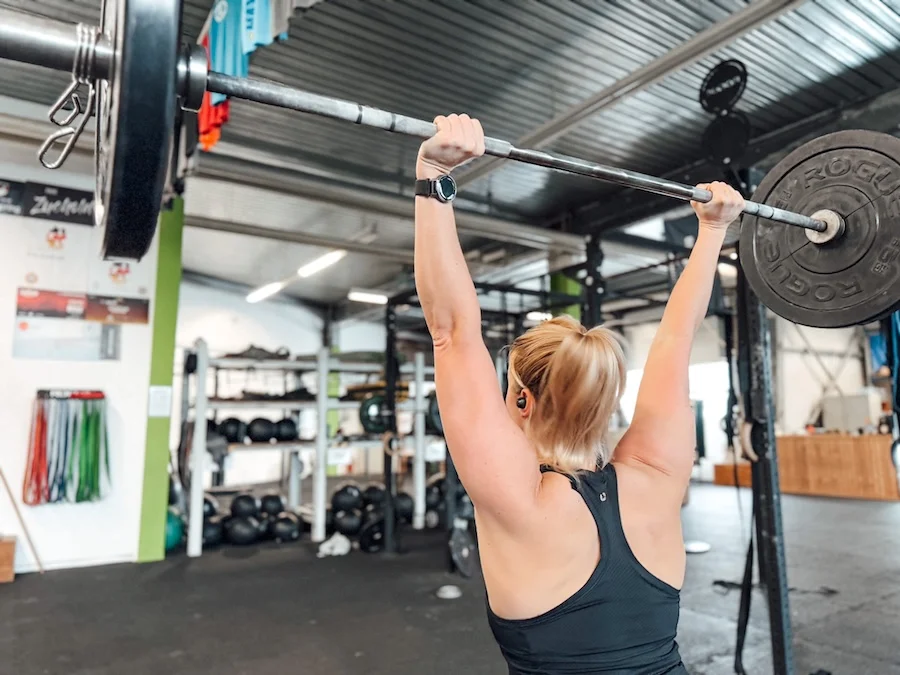
The push press isn’t a complicated exercise, but it’s one worth taking a closer look at.
If you execute the movement properly, you’ll notice the difference immediately: more control, more efficiency, more weight overhead—without everything feeling heavier.
So: During your next workout, don’t just “push up”—pay attention to where the movement starts, how you transfer the force—and how each repetition feels.